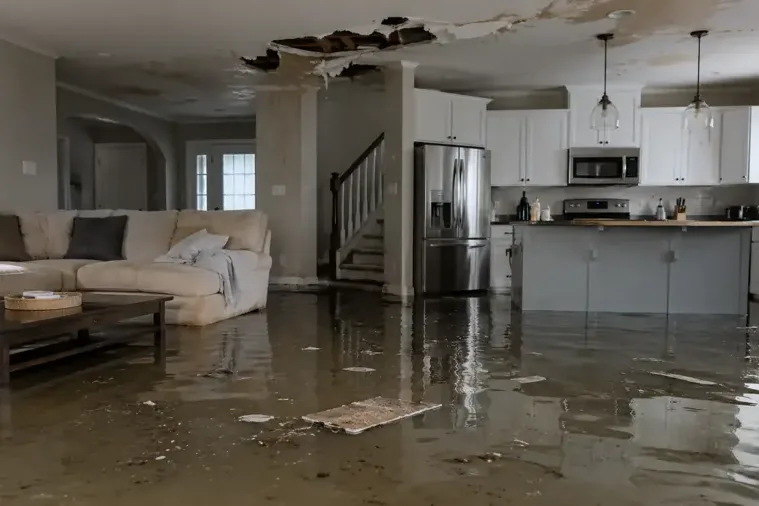
In October 2025 a storm that dropped more than an inch and a half of rain sent mud and water into backyards behind Wilshire Avenue near Beach Boulevard and Lambert Road, according to KTLA. Residents told the station the mud problem returns whenever it rains. Whatever the cause turns out to be, a homeowner whose patio, garage or back door has just met a wave of mud needs a plan for the first day.
Key takeaways
- Mud and water reached backyards behind Wilshire Avenue near Beach Boulevard and Lambert Road after more than an inch and a half of rain in October 2025, per KTLA.
- The causes people have named are resident statements, not a city finding, and cleanup does not have to wait for them to be settled.
- Mud carries soil, debris and bacteria, so water that reaches a patio, garage or door is treated as contaminated.
- Shovel loose mud away from doors and walls, and keep it from being tracked indoors.
- A dated record of each event, with photos, helps if the problem comes back with the next storm.
What happened behind Wilshire Avenue
KTLA reported that a storm in October 2025 dropped more than an inch and a half of rain and sent mud and water into the backyards of homes behind Wilshire Avenue, near Beach Boulevard and Lambert Road.
Residents told KTLA the mud problem recurs whenever it rains. Their explanations are statements by residents, not a city finding, so no cause is assigned here.
La Habra has a hot summer Mediterranean climate, and the October 2025 storm shows that an inch and a half of rain can be enough to put mud at a back door.
Where La Habra rain goes
The city has two drainage systems. Sanitary sewers carry waste from sinks, bathrooms and washing machines to a treatment plant, and storm drains carry rainwater to the ocean.
The storm drain system begins at the curb gutter, and the water in it is not treated or filtered. All of the city's rainwater runoff drains into Coyote Creek, a principal tributary of the San Gabriel River.
That matters at the yard level. Runoff that reaches a backyard has crossed streets, slopes and fences first, so it carries whatever those surfaces held.
Why mud counts as contaminated water
Mud is soil, debris and water together. It can carry bacteria, fertilizer, oil and animal waste, which is why storm and flash flood cleanup treats it as contaminated, not as clean rain.
- Wear boots and gloves, and keep children and pets out of the wet area.
- Do not track mud into the house on shoes or paws.
- Do not use a household vacuum on mud or muddy water.
- Wash hands after handling anything that sat in the mud.
The first day after the storm
The sequence is safety, proof and removal.
- Take photos and short videos of how high the mud reached on fences, walls and doors before it is disturbed.
- Shovel loose mud away from the door and the base of the walls, and pile it away from the house.
- Move stored items off the garage floor and lift rugs and doormats inside the door.
- Check the garage, the laundry room and any room with a back or sliding door for water that crossed the threshold.
- Call the extraction crew if any water or mud reached the inside of the house.
When the mud reaches the house
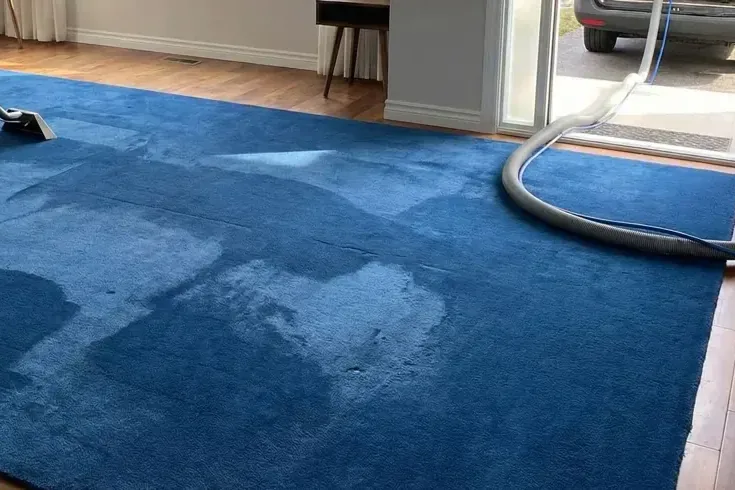
Water that crosses a threshold carries fine mud with it. Even a thin film on the floor can leave soil behind in the carpet, under the baseboard and in the gap at the bottom of a wall.
Garage and patio doors
Standing muddy water on a garage floor is removed through water extraction, and the floor is washed and disinfected. Boxes and cardboard that stood in it are discarded.
Patios and walkways
Outdoors, mud is shoveled first and then rinsed toward the yard, away from the door. A slick film left on a patio or walkway should be washed off before anyone walks on it, and the rinse water should not be pushed under a door.
Flooring and wall bottoms
Carpet and pad near the door are the first to go, since mud works into both. Baseboards come off, and drywall is checked with a moisture meter and cut out where it wicked water.
Getting a yard ready before the next storm
None of these steps stops a hard rain, but they give runoff a path that does not end at the back door.
- Clear gutters, downspouts and any yard drain of leaves and silt.
- Move soil piles, mulch and planters away from the walls and the door threshold.
- Keep sandbags or towels where they can be reached quickly, and place them before the rain, not after.
- Lift stored boxes in the garage onto shelves, and keep valuables off the floor of rooms with a back door.
- Walk the yard after a storm and look for places where water pooled or mud collected.
When the problem repeats with each rain
A problem that returns every time it rains needs more than a cleanup, and a record is the best starting point. The same steps apply to other storm losses, covered in water damage restoration for local homes and the broader storm and flash flood cleanup process.
- Note the date, the amount of rain and where the water entered.
- Keep photos of each event and of the cleanup that followed.
- Talk with neighbors, since a shared pattern is easier to describe than a single incident.
- Share the record with the city, an association or an insurance company when that conversation starts.
Questions
Is mud from a storm contaminated?
Yes. Mud and runoff can carry soil, debris, bacteria and chemicals, so anything porous that sat in it is treated as contaminated.
Can the mud just be hosed away?
On a hard surface outdoors, loose mud can be shoveled first and then rinsed away. Inside a garage or house, rinsing spreads the contamination, so extraction and cleaning are the safer route.
Who is responsible for the mud?
Residents have named causes in news coverage, but the city has not made a finding, and no blame is assigned here. Cleanup is needed either way, and a dated record is useful if responsibility is discussed later.
Can mud get under flooring?
Yes. Water carrying fine soil can slip under a door and into the gap under baseboards and flooring, where the soil stays behind after the water dries.
Should anything be done before the next storm?
Clear the gutters and drains, move soil and planters back from the door and lift stored items off the floor. These steps do not make a house waterproof, but they lower the amount of mud and water that reaches it.
What if it happens every time it rains?
Keep a dated record of each event and its photos, clean up promptly, and ask the extraction crew what the readings show about how far the water reached.