Storm and Flash Flood Cleanup in Norwalk, CA
Most rain here falls from November through April, and a heavy storm can push runoff through doors and garages. The response team removes mud and water, cuts wet walls and treats the surfaces before drying.
(888) 563-9619Storm water inside? Call now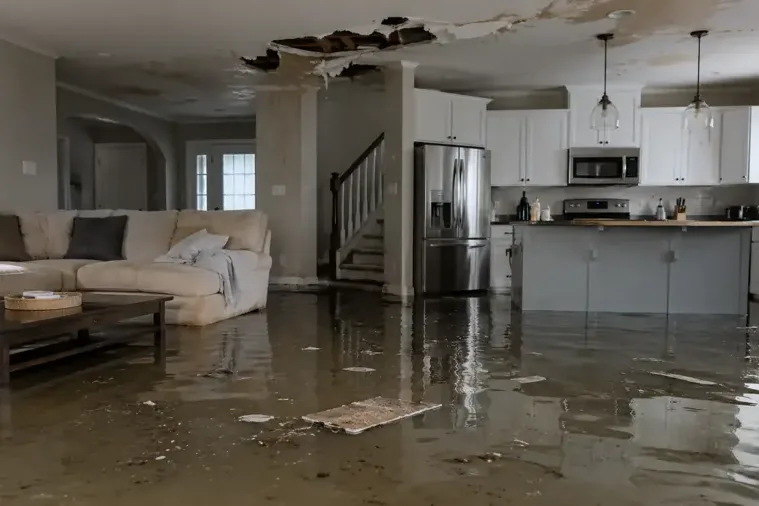
First steps for storm and flash flood cleanup
A few minutes of the right moves protect the structure and the claim before the equipment arrives.
- Stay out of the water. Flood water can carry contamination, and standing water near outlets is an electrical hazard.
- Cut the power. Switch off breakers to wet rooms if it is safe to reach the panel.
- Lift what you can. Move electronics, documents and small furniture to dry ground above the water.
- Record the damage. Photograph the water line on walls and each wet room before cleanup.
How storm and flash flood cleanup is handled
Flood water is not clean water. It carries soil, debris and runoff, so it is treated as contaminated until proven otherwise. The area averages about 13 inches of rain a year (1994 to 2024), mostly from November through April, so storm cleanup concentrates in those months.
Rapid local response
24/7 dispatch treats active water as urgent at any hour, weekends and holidays included.
IICRC S500 drying standard
Structural drying, not surface drying: air movers and LGR dehumidifiers sized to the class of loss.
Claim-ready documentation
Moisture maps, daily psychrometric logs and timestamped photos taken before anything is removed.
Slab-home know-how
Copper under the slab, garage water heaters, attic air handlers and two-story bathrooms lead the local list.
What does storm and flash flood cleanup cost in Norwalk, CA?
A flooded garage alone tends to run $3,000 to $5,500. A garage plus one room is $5,500 to $10,000, and several rooms with contents removal reach $10,000 to $15,000 or more.
Garage only
- Pump-out and mud removal
- Shared wall flood cut
- Antimicrobial, then drying
Garage and one room
- Carpet and pad removed
- Flood cuts, insulation out
- LGR drying
Several rooms
- Containment
- Contents removed
- Longer monitoring
Ranges are typical, not a quote: water category, square footage, material class and how fast drying started move the number most. Run the water damage cost calculator for a closer range. Coverage depends on your policy, so check with your own insurer.
The storm and flash flood cleanup process, step by step
The tech who does the walkthrough maps moisture before any equipment goes down, and the equipment stays until the readings say dry.
Assess the water line
Readings show how high the water reached and what it soaked.
Remove and cut
Mud, debris and soaked materials come out, and walls are cut above the water line.
Clean and treat
Surfaces are cleaned, then treated with an antimicrobial.
Dry and read
Dehumidifiers and air movers run while daily readings track progress.
What to know about storm and flash flood cleanup
Preparedness and regional storms
The City of Norwalk Office of Emergency Management publishes flood preparedness guidance, including household plans and evacuation routes. Reading it before the rainy season is easier than reading it during a storm.
Two Southern California storms stand out: the flooding of February 27 to March 3, 1938, and the atmospheric river of February 4 to 6, 2024, which brought flash flood warnings. Both were regional events, and damage in this city was not confirmed for either.
What the crew does after a storm
- Mud, debris and standing water removed
- Flood cuts above the water line on affected walls
- Wet insulation and carpet pad taken out
- Surfaces cleaned and treated before drying starts
If drains back up in the rain
When a heavy storm overloads drains and sewage comes up with the water, it is handled as sewage backup cleanup. Walls and floors then move into structural drying.
Storm and flash flood cleanup coverage around Norwalk
The response team handles storm losses in Carmenita, Civic Center and Studebaker and on the blocks near Pioneer Boulevard, Imperial Highway and Carmenita Road, in ZIPs 90650, 90651 and 90652.
The same service nearby: storm and flash flood cleanup in Cerritos, Bellflower, Paramount.
Storm and Flash Flood Cleanup questions in Norwalk, CA
Water still moving?
Shut the water off at the main if it is safe, stay clear of wet outlets, and take photos before anything moves.
(888) 563-9619 Storm water inside? Call nowIs flood water dangerous to touch?
Yes. It carries soil, runoff and sometimes sewage, so gloves, boots and careful handling matter, and children and pets should stay out until the area is cleaned.
How high does a wall need to be cut?
A flood cut goes above the visible water line, plus a margin where readings show moisture wicking upward inside the drywall.
Can carpet from a flood be saved?
Rarely. Flood water is contaminated, so carpet and pad that it soaked are normally removed rather than cleaned and reused.
Does the rainy season change the schedule?
Rain falls mostly between November and April, so storm cleanups bunch up in those months. Drying equipment and crews are scheduled by how fast water is spreading.
Where does flood preparedness information come from in Norwalk?
The city Office of Emergency Management publishes household plans and evacuation routes. Owners can review them ahead of winter storms.
Will a flood claim need photos?
Yes. Pictures of the water line, damaged contents and each room, along with daily drying logs, give an adjuster a clear record.
Flood water inside? Get it cleaned and dried.
Flood water carries soil and debris into every low spot. The response team clears it, cuts the wet walls and treats the surfaces before drying.
(888) 563-9619Start the flood work