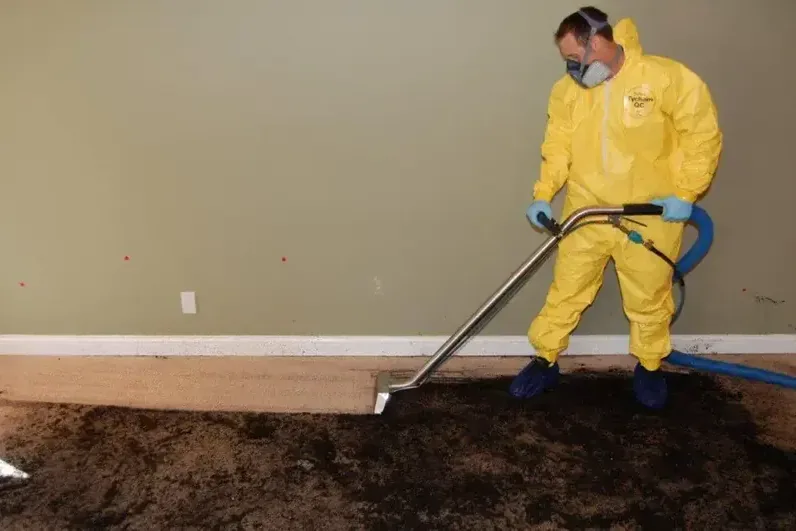
A toilet that gurgles, a shower that fills with gray water or a floor drain that bubbles can mean the pipe carrying waste out of the house is blocked. In Norwalk the property owner maintains the house lateral, including the stretch in the public right of way, and the City of Norwalk Public Services Department is the city contact for sewer backups. Knowing who handles what saves time, but the cleanup inside the house cannot wait while that gets sorted out.
Key takeaways
- In Norwalk the property owner maintains and repairs the house lateral, including the part in the public right of way.
- The city's Public Services Department is the contact for sewer service and sewer backups.
- Sewage is Category 3 water, so porous materials it touches are removed and hard surfaces are disinfected.
- Stay out of the wet area, keep children and pets away, and avoid flushing or running water while a backup is active.
- Photographs and a written list of what the sewage reached help with the landlord, the plumber and any insurance conversation.
Who is responsible for the pipe
The lateral is the pipe that carries waste from the house to the sewer main. Under the city's sewer lateral page, the property owner is responsible for maintaining and repairing it, including the part that runs through the public right of way.
The city's Public Services Department is the contact for sewer service and sewer backups, so a backup is worth reporting there even when the repair falls to the owner.
- Owners arrange and pay for the plumber who clears or repairs the lateral.
- The Public Services Department is the place to report the problem and ask about the sewer.
- Tenants report the backup to the landlord or property manager right away, since about 9,040 of the city's homes are renter occupied.
Three jobs, three different people
A sewage backup is really three jobs, and the loss stays smaller when each one has a clear owner.
- The city receives the report and is the contact for sewer service.
- The plumber finds the blockage, clears it and repairs the lateral if it is damaged.
- The restoration team removes the water, takes out contaminated material, disinfects and dries the rooms.
Signs of a sewer backup
Backups often start small. Catching them early keeps the wet area small too.
- A toilet that bubbles or gurgles when a sink or washer drains.
- Several drains slowing at once, especially the lowest ones in the house.
- Wastewater coming up through a shower, tub or floor drain.
- A sewage odor in a bathroom or laundry area that does not clear.
What to do in the first moments
A backup is a health problem as much as a water problem, so the first steps are about limiting exposure.
- Stop using toilets, sinks, showers and the washer so no more water enters the pipe.
- Keep everyone out of the wet room, and keep pets out too.
- Photograph the water, the affected rooms and anything it reached.
- Report the backup to the city Public Services Department.
- Call a plumber to find the blockage and a restoration team for the cleanup.
Why sewage cleanup is different
Water from a toilet, tub or drain backup is Category 3, which means it can carry bacteria and viruses. It is handled with protective gear, and it does not get dried in place the way a clean pipe leak does.
The cleanup removes contaminated material and disinfects what stays. This is the work described under sewage backup cleanup.
Speed matters because porous materials keep absorbing the contamination for as long as they stay wet. Carpet and drywall left in place also hold odors long after the water is gone.
What gets removed
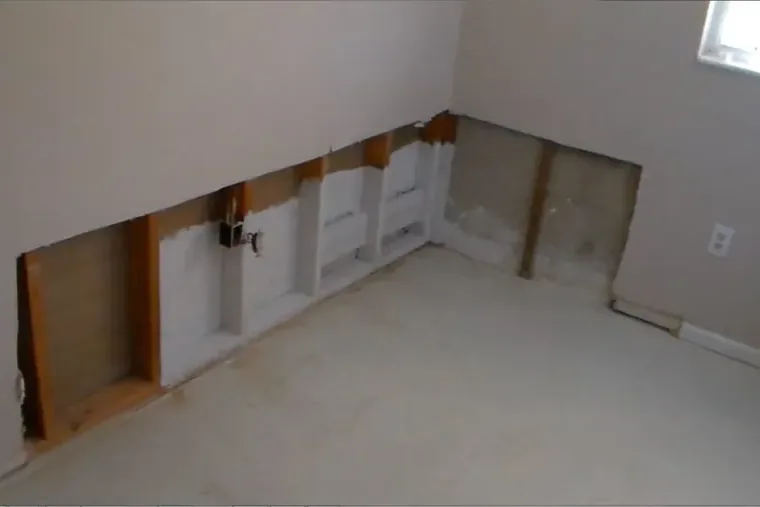
Carpet, pad, insulation and drywall that the sewage soaked are cut out and bagged, along with cabinet toe kicks and other porous trim.
What gets cleaned
Tile, concrete, sealed wood and other hard surfaces are cleaned and disinfected. A hard surface that sat in sewage is treated before any drying equipment is set up.
Why housing age matters here
The median Norwalk home was built in 1957, and about 12,780 of the city's 27,169 housing units date from the 1950s. Many laterals have therefore been in service for a long time.
After a backup, ask the plumber what caused it and whether the pipe should be inspected. A blockage that returns can send wastewater back into the same rooms.
Most of the housing is detached single family homes, about 19,576 units, so the work usually happens in one household's bathroom, laundry room or hallway rather than across shared walls.
Owners hold about 17,989 of the occupied homes and renters about 9,040, so a backup often involves a landlord who needs to hear about it in writing. The restoration team's sewage backup work is the same for both.
Repairs, permits and drying
The City of Norwalk Building and Safety Division says permits are required for most plumbing, mechanical and electrical improvements. A plumber can say whether a lateral repair needs one.
Once the contaminated material is gone and surfaces are disinfected, the rooms are dried. Wall bottoms, baseboards and subfloor are measured with a moisture meter, and equipment stays until the readings reach target, as covered by structural drying.
Ask for a written summary of what was removed, cleaned and dried, with the moisture readings, so the landlord or the insurance company has a record.
Air scrubbers with HEPA filters can be set up in the work area to clean the air while the removal and drying go on.
- Ask for the cleanup and the plumbing repair to be scheduled so the pipe is clear before the rooms are rebuilt.
- Keep receipts and photos together for the landlord or the insurance company.
- See water damage restoration for local homes for other kinds of water loss.
Questions
Is the city responsible for a sewage backup inside my house?
Report the backup to the city's Public Services Department, since it is the contact for sewer backups. The house lateral is the owner's to maintain, and the cleanup inside the house is a separate job for a restoration team.
Can I clean up sewage myself?
A small spill on a hard floor can be handled with gloves and a disinfectant. Anything that soaked carpet, drywall or insulation needs removal because the contamination goes beyond the surface.
Does a lateral repair need a permit?
The Building and Safety Division says permits are required for most plumbing improvements. Ask the plumber whether the repair needs one before work starts.
What should a tenant do after a backup?
Tell the landlord or property manager right away, photograph the damage and move belongings out of the wet area. The owner arranges the pipe repair.
Can a backup damage more than the bathroom?
Yes. Wastewater follows the lowest path, so in a single family house it can run from a bathroom into a hallway, bedroom or laundry room and wick into baseboards. The team measures beyond the visible edge of the wet area.
How do I know the cleanup is finished?
The plumber confirms the pipe is draining, and the restoration team confirms the surfaces were disinfected and the moisture readings reached the dry target.