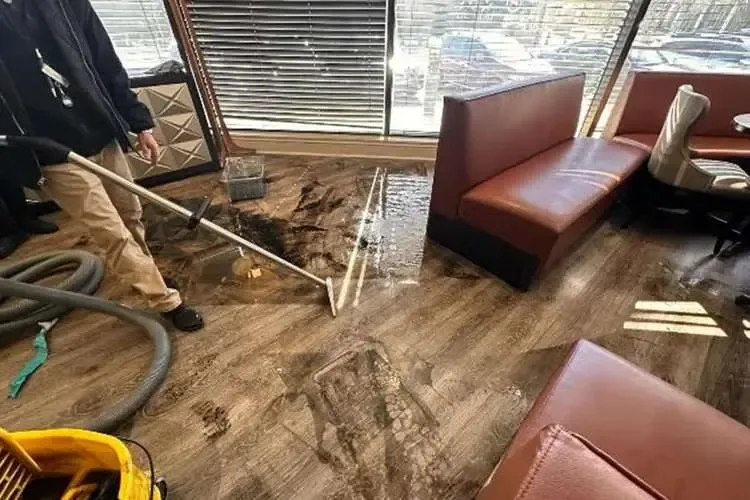
A water loss in a business is a loss of sales as well as a wet floor. Shops, offices, restaurants and dealership service bays on the city's corridors, such as Del Amo Boulevard, South Street, 183rd Street, Artesia Boulevard and Studebaker Road, cannot always close for a week while a building dries. A good plan stops the water, protects the stock and the records, and dries the space in phases so the doors can stay open where it is safe.
Key takeaways
- Stop the source first, because a pipe leak, a roof leak and a sewage backup each have a different first step.
- Keep customers and staff out of the wet area, and lift paper, stock and electronics off the floor.
- Phased drying lets one section of the space keep working while another is dried.
- Tenants and landlords should agree early on who controls the shutoff, access and the repair.
- Dated photographs, an inventory and the moisture readings make the lease and insurance conversations simpler.
What a water loss costs a business
The floor is only part of the damage. A business also loses sales, working hours and sometimes stock, and the pressure to reopen can lead to shortcuts that leave moisture behind.
The city's corridors include Del Amo Boulevard, South Street, 183rd Street, 166th Street, Artesia Boulevard, Bloomfield Avenue, Carmenita Road, Studebaker Road, Gridley Road and Shoemaker Avenue. A loss on any of them has the same questions to settle: what must close, what can stay open and how quickly the building can be made dry.
The first day: an owner's checklist
A manager who acts in a set order protects people first, then the business.
- Keep staff and customers away from the wet area, and turn off power to any wet outlets or equipment.
- Stop the source, whether that means closing a water valve, covering a roof opening or stopping use of a drain.
- Photograph the water, the damage and the stock before anything is moved.
- Lift paper files, inventory, electronics and cardboard off the floor.
- Call the extraction crew to remove standing water, and tell the landlord or property manager.
Different sources, different first steps
The cause of the water decides how it is handled. Every commercial loss starts with the same question: where is the water coming from, and is it clean?
A pipe or fixture leak
Clean supply water is the simplest case. The valve is closed, the water is extracted and the materials that can be dried are dried.
A roof leak after a winter storm
Most of the city's roughly dozen inches of yearly rain falls in a few storms between November and March, so a roof that has been dry for months can fail at the first heavy rain. Ceiling tiles, insulation and carpet below are checked for water.
A sewage or drain backup
A backup is contaminated water. The area is closed off, porous materials are removed and surfaces are disinfected before drying starts.
Storm water from outside
On flat streets, runoff can cross a sidewalk and slip under a door. That water is treated as contaminated, even if it looks like rain.
Drying in phases so the doors can stay open
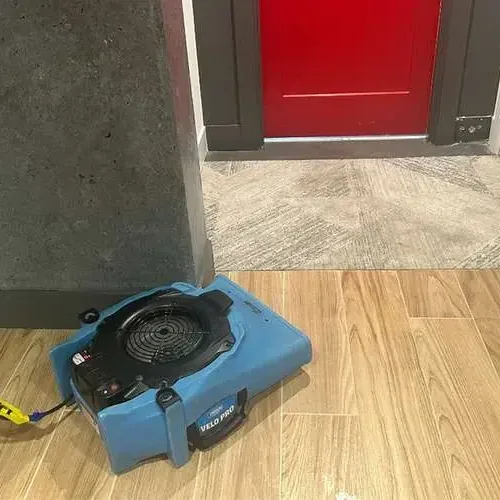
The restoration team divides a wet space into zones. Plastic sheeting separates the work area from the part of the business that is still running, and equipment is set in the wet zone, away from customer paths.
Standing water goes first through water extraction. Then dehumidifiers and air movers run until the readings match a dry reference, which is the target used in structural drying.
- A restaurant may be able to keep a dining area open while the kitchen floor and wall bottoms are dried, if the owner and any health requirements allow it.
- A shop can move its sales floor to the dry side of the space.
- An office can relocate desks, while equipment dries the wet zone.
- A service bay can stay in use for work that does not need the wet area.
Hidden moisture in a working space
A commercial space is full of places where water hides, and a floor that looks dry can still hold moisture.
- Ceiling tiles that stain, sag or sit unevenly above a leak.
- Wall base, trim and cabinet kicks that swell or pull away from the wall.
- Storage rooms with a musty smell and cardboard that feels soft.
- Flooring that cups, lifts or feels spongy in one section.
Landlords, tenants and shared buildings
Many businesses lease their space in a larger building, so a leak can start in a unit that belongs to someone else. The tenant controls the contents.
The landlord usually controls the roof, the main pipes and access to the neighboring units.
Agree early on who calls the plumber, who allows the restoration team into the adjoining space and who is told about the work. Details like these are part of commercial water damage planning.
- Give the team a contact who can make decisions on site.
- Tell neighboring businesses early, since water often crosses a shared wall.
- Ask that equipment noise be scheduled around opening hours where the work allows.
Records that protect the business
A business owner often has to explain a loss to a landlord, a lender and an insurance company. Records made on the first day carry the most weight.
Ask the restoration team for a written scope and the moisture readings, since they show what was wet and when it dried. A final set of readings is the sign that rebuilding can start.
Rebuilding too early traps moisture under new flooring and paint, and the problem returns as peeling, odor or swelling.
The same written record applies on any of the corridors named above, within the areas the restoration team covers.
- Dated photographs and video of the water, the damage and the stock.
- An inventory of damaged items with the purchase cost where it is known.
- A log of the hours or days the business was closed or limited.
- Receipts for temporary costs such as equipment rental or moving stock.
Questions
Can a business stay open while the building dries?
Often, yes. The team separates the wet zone from the working area with containment, so part of the space keeps running. The plan depends on what is wet and how safe the dry area is.
What should be moved first?
People and records first, then electronics, stock and anything that wicks water, like cardboard and fabric. Lifting items off the floor limits the loss even before the extraction crew starts work.
Who calls the plumber, the tenant or the landlord?
It depends on the lease and on where the leak started. The tenant should report it at once, and the landlord usually controls the main pipes, the roof and the structure.
Do ceiling tiles and carpet always have to go?
Wet ceiling tiles are usually replaced, since they sag and stain. Carpet that got clean water can sometimes be dried, but carpet that got sewage or storm water is removed.
How is the building confirmed dry?
The team takes moisture readings in the walls, floors and ceilings and compares them with a dry reference. Equipment stays until the readings reach target.